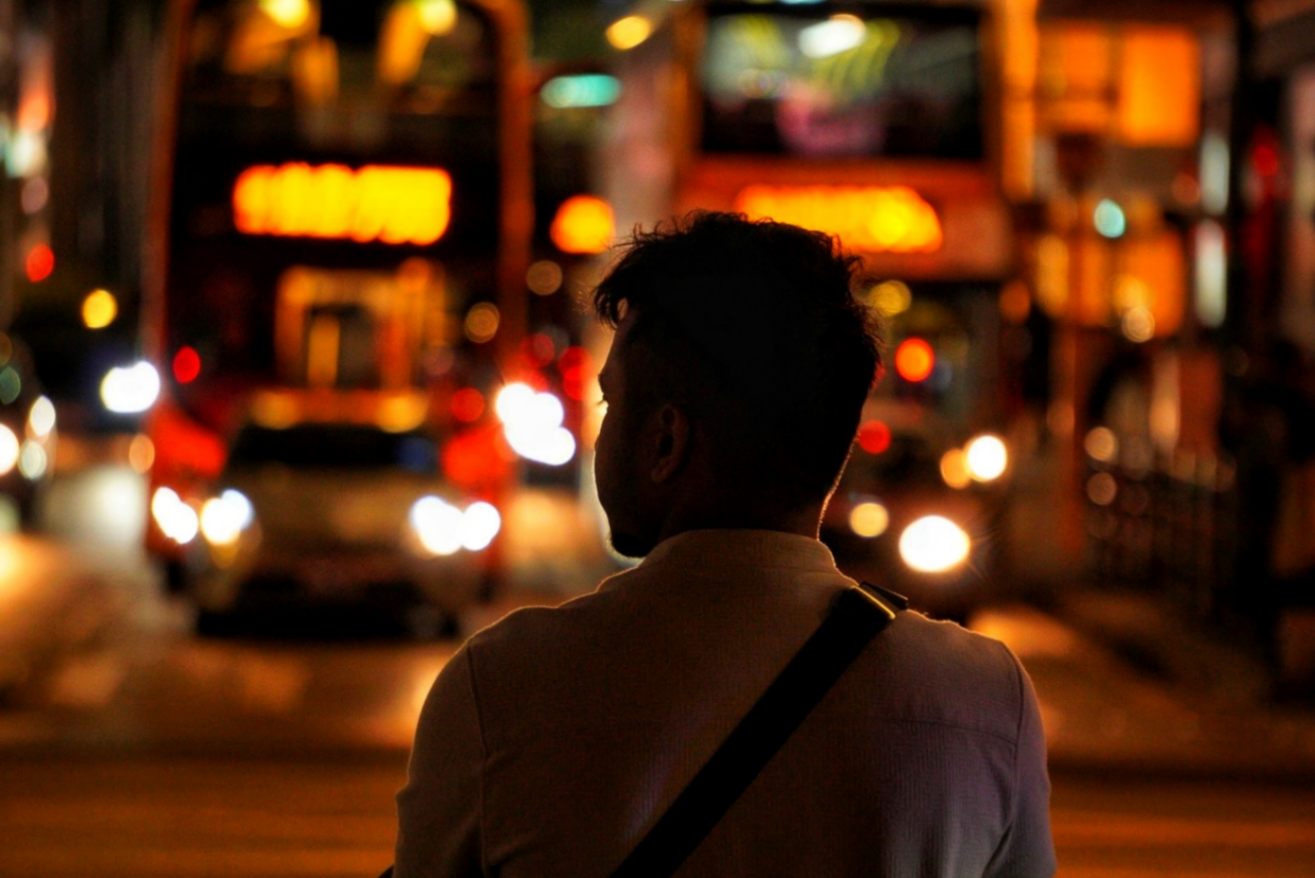
I was walking down this street full of people on a beautiful afternoon in Delhi. Clear skies and clean air are a rare occurrence in Delhi, and thus, it was obvious that the whole city would be out that day.
A place I used to go for an evening walk (With a pollution mask, of course) was so crowded I could barely walk 20 seconds without running into another person trying to scrape by on a footpath that was clearly not as wide as people thought it was.
The environment was what a past version of me would describe as “personal hell”, because the whole time, my focus wasn’t on how blue and beautiful the sky was, but rather on “wait, there are so many people, what are they thinking about me?” It sounds silly, but this was what I was thinking about the entire time I was there.
This wasn’t new to me; I have had this kind of anxiety ever since I can remember. This has been the shaper of my life’s experiences for as long as I can recall. Not going to gaming arenas because they’re too crowded, not attending weddings because there are too many people, and what would they think of me if I’m not well-dressed? The opinions of others mattered to me way too much, to the point that it started hampering who I was, and what I associated with being something fun. The moment there were more people involved, an activity was no longer fun for me. This meant that everything I called fun was built around my need to either garner others’ approval or on how empty the activity would be. Even the times I did things were structured around a lack of a crowd, where my mind would be at ease.
Needless to say, this strategy backfires eventually for almost everyone. I knew I wasn’t alone in this struggle, but even voicing the fact that I was scared and looking for others’ approval could be a clear sign to the world that I wasn’t worthy of their respect. Or so I thought.
It turns out, most people actually respect you for voicing your shortcomings. Because it shows self-awareness, something that a lot of people do not have.
I have realized now that everything in life, from not being able to walk peacefully in a park to settling for someone who isn’t good for you, are all linked to low self-worth. If you don’t respect yourself, you’ll wonder and worry about what someone else thinks of you, you’ll take whatever crumbs the world gives you, even if you deserve the whole pizza.
I read this somewhere, probably on an Instagram reel:
Whenever you think less of yourself and stop yourself from doing what you want, someone less capable takes your spot. The world rewards audacity and self-respect, not potential.
For people who know me, I can’t let that happen. It was clear to me that my sense of self was causing issues for me. Really big issues, from not being able to put myself out there to find a good partner (You can’t find someone sitting at home, at least not if you want something genuine which you’ll hardly ever find swiping on these apps - They’ll show you everyone you were NOT supposed to meet in daily life - Take it as you want to) or going for jobs where I wasn’t an expert but could still take a leap of faith for what they might unlock for me later on.
Well, this post touches on where I think most of these issues come from, and my journey towards overcoming all the baggage that comes from asking for other people’s approval.
The roots - What a therapist would focus on when you start the process
When you start therapy, the most common thing that will happen to you in the first few sessions is that you’ll be asked to talk about your entire childhood, your struggles, your relationship with your parents, your likeness to your friends, and your academic background.
While it might be super uncomfortable for people to talk about all this. It tends to be very important, because humans are infinitely complex creatures. And the problem with this infinite complexity is that it is mostly in the mind and not in the body. You can predict what a muscle will do when exposed to certain tensions, but you can almost never predict how someone is going to react to an external action. It is merely a guess.
As such, the best way to predict what you’re going to do is to observe what you have done and where you come from. And that’s where these chats about your past come into the picture. Your childhood shapes everything that you are, because as an adult you can consciously choose to build or remove parts of your life, but as a child, life happens TO you and not FOR/BY you.
Most of our insecurities, our fears, our reactions stem from our childhood experiences, and it’s not a surprise that most of them are indeed irrational, which have just found a place in our day-to-day because we’ve rationalized them subconsiously after years of being convinced that it’s all true.
So is the need for approval from others. If your parents keep reminding you of “what would others think?” or “is that how xyz is supposed to dress?” You, as a child, will never have the space to ask, “Is anyone even looking at me? Or even if they do, do they care enough for this to be such a big deal?” These questions often come from parents who themselves have never had counseling on the fact that the world doesn’t care.
From the discomfort of being in a room full of people to not being able to let go of a toxic partner, to staying in a job that you’re overqualified for. It’s all a game of how worthy you think you are of something better.
Notice that when you are and behave as if you’re worthy of something, it eventually comes to you. This isn’t spiritual talk; this is pure fact because you build your life around those beliefs and eventually run into opportunities where you get those things.
Things you’d notice that happen when you don’t think highly of yourself
- Everything you do becomes an “act” because you can never truly let go and just be free to do what you want to. There’s always a chip on your shoulder.
- Micro-interactions are overthought. Someone didn’t say hi back - Your mind automatically goes to “Did they want to ignore me?”, “Do they not like me?” and whatnot - Ignoring the obvious facts that the person just didn’t hear your hi and that it has nothing to do with you.
- You tend to stick around toxic friends and partners because you’re afraid there isn’t anyone else apart from them.
- Because of the above, your friendships are give-give-give. You don’t know what a healthy friendship looks like.
- You put people on a pedestal, and that leads to the obvious problem of your emotions being disregarded and you often feeling drained and used after every stretch of stay with a person.
Overcoming your addiction to other people's approval
TLDR: Even if not everybody likes you, the world doesn’t collapse. And you’ll still be fine.
Humans are smart animals, and it’s interesting that even with all the power in the world to think about what should and shouldn’t be important to us, we end up falling for such trivial things and build our lives to revolve around them. “People pleasers” exist because their entire personality is built around pleasing other people.
Guess what? The more people you please, the more likely it is that people will just walk over you. People can sense desparation and lack of self-respect, and a person who doesn’t respect oneself, isn’t going to be respected by someone else.
Why do we fall for such people-pleasing traps? Because we’re wired by evolution. We’re social creatures, and for most of our history, we’ve been very closely social beings with very limited social circles and have depended on the approval of the tribe to survive. If the tribe suddenly decided you were not worthy, you would lose protection, food, and shelter. That could mean the end of you.
Those conditions no longer apply to us, which, very simply put, means that our brain is running on software that is thousands of years old, prioritizing survival when the world around it has changed significantly. Today, if you do get rejected by a fellow member of the tribe (Let’s say, the person you’re approaching on the street), life will not end; you both will go your ways, and life will continue as it was before.
My journey of overcoming my social anxiety and people-pleasing tendencies started with just a couple of thoughts:
- How often do you remember someone you saw in public? No matter how weird a thing they were doing back then. You might remember the weird things people do, but you’ll never remember their faces, and chances are, they could walk by you tomorrow, and you wouldn’t have the slightest hint they were the same person.
- If you put yourself in the shoes of someone you’re subconsciously afraid of, you’ll realize they’re humans as well. Humanizing everyone else around you is a great tool to overcome social anxiety. Afraid of going up and talking to someone? Remember, if you do so with good energy, it’ll almost never backfire. Put yourself in the shoes of that person, would you not want someone to compliment you for your outfit or strike up an interesting and fun conversation?
I will give you this really nice example: If you saw a classmate you have not met for decades, you will walk up to them and be super excited to talk to them. At first, they may not recognize you, and that’s expected, and that’s where they’re still a stranger on the street. But soon, your positive energy and enthusiasm are going to remind them about it, and they’ll not be bothered at all. Get this into your head: It works wonders. Be curious, be interesting, and have good energy. That indirectly unlocks doors to rooms you didn’t even know existed.
A few things that build on top of these thoughts that have helped me immensely:
- Even if everybody doesn’t like you, the world doesn’t collapse. And you’ll still be fine. You don’t even like everybody.
- No one, and let me repeat, no one. Looks at you with the scrutiny that you yourself do. Everyone is busy in their own lives and worried about themselves; they don’t have time to worry about you. This might sound depressing to someone whose life has been built around seeking approval from others, but internalizing this is one of the most liberating feelings you’ll ever get.
- As for asking for what you want from people, if you never ask, the answer is always no. If you ask, the best-case scenario is you get what you want. The worst case is that you continue living in your current state. There is no outcome where you’re worse off than when you started.
- Putting others on a pedestal is a recipe for disaster because they’re still people at the end of the day. And people are, by their very nature, flawed and imperfect. Be kind to yourself; even the highest functioning CEO of a Fortune 500 company is working on things and has insecurities. I would say even more than you because they have a lot more to lose from a single wrong move.
The superpowers that get unlocked once you start seeing yourself in a positive light
The best way to put your mind to doing something is to imagine how positive the outcome might be and how good you would feel once the job is done. This isn’t me saying so, it’s research saying it.
Thus, it might help, for motivation, to look at what all happens once you start looking at yourself in a positive light, and turns out that ALMOST everything changes.
- You start moving around more comfortably because you aren’t looking at other people, and knowing they aren’t looking at you either makes you comfortable in your own self.
- You stop overthinking every micro-interaction, realizing that people forget in a moment what you just said, is a very powerful realization.
- You open conversations more easily, retain them with curiosity because you’re not afraid of being rejected.
- You realize that people are mostly neutral-to-positive and almost never negative. Everyone is looking for connections, and you never know where they lie. The best memories lie on the other side of fear and the best conversations lie on the other side of a curious chat with strangers.
- You do not stick to partners and friends that aren’t good for you, because the fear that “I am not enough so let me be with them, how will I get anyone else to like me?” doesn’t come to your mind. You put your interests first.
- You say NO more often, and without hesitation, because you matter the most to yourself. Because why would you put your well-being behind the approval of others?
- You start seeing people for what they are. No sugarcoating, no hiding realities. You realize that everyone is a human and they’re flawed too, just like you.
As the saying goes, a good man is not a good guy when his peace is messed with. You have to understand that putting yourself first isn’t wrong; it’s expected and necessary. A hard truth to swallow and come to terms with is that whoever you have in your life today, most of them will likely not be in your life in a few years (Heck most of them will not be there in the next few months even), and a surefire way to live a fulfilling life is to make sure you love and respect yourself, your needs and your choices.
Because when everyone you’re trying to please is gone, you’re left with yourself, and you don’t want to look in the mirror and say, “Oh, I wish I could have done that instead.”